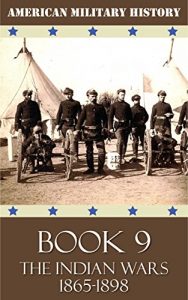
Perhaps because of a tendency to view the record of a military establishment in terms of conflict, the U.S. Army’s operational experience in the quarter century following the Civil War has come to be known collectively as the Indian Wars, although those inhabitants of America described by the catchall name of Indian did not have anything like a monolithic culture or society. Previous struggles with various Indian tribes, dating back to colonial times, had generally been limited as to scope and opponent (the Pequot war in New England that virtually exterminated that tribe being one of the more notable exceptions) and took place in a period when the Indian could withdraw or be pushed into vast reaches of uninhabited and as yet unwanted territory to the west. By 1865 this safety valve was fast disappearing; routes of travel and pockets of settlement had multiplied across the western two-thirds of the nation, and as the Civil War closed Americans in greater numbers and with greater energy than before resumed the quest for land, gold, commerce, and adventure that had been largely interrupted by the war.
The showdown between the older Americans and the new, between two ways of life that were basically incompatible, was at hand. The besieged Indian, with an alien civilization pressing in and a main source of livelihood, the buffalo, threatened with extinction, was faced with a fundamental choice: surrender or fight. Many chose to fight, and over the course of twenty-five years the struggle ranged over the plains, mountains, and deserts of the American West, a small-scale war characterized by skirmishes, pursuits, massacres, raids, expeditions, battles, and campaigns of varying size and intensity. Given a central role in dealing with the Indian, the Army made a major contribution to continental consolidation and in the process shaped itself as a culture and as an institution in many ways...
The showdown between the older Americans and the new, between two ways of life that were basically incompatible, was at hand. The besieged Indian, with an alien civilization pressing in and a main source of livelihood, the buffalo, threatened with extinction, was faced with a fundamental choice: surrender or fight. Many chose to fight, and over the course of twenty-five years the struggle ranged over the plains, mountains, and deserts of the American West, a small-scale war characterized by skirmishes, pursuits, massacres, raids, expeditions, battles, and campaigns of varying size and intensity. Given a central role in dealing with the Indian, the Army made a major contribution to continental consolidation and in the process shaped itself as a culture and as an institution in many ways...