![Baixar [Learn Chinese-Bilingual Crime Story] 第二场葬礼 — The Second Funeral: Chinese-English Parallel Text (Chinese HSK 3, Chinese HSK 4) (Chinese-English Bilingual Stories Book 1) (English Edition) pdf, epub, eBook](https://br.99ebooks.net/wp-content/uploads/2017/05/51CRy-cv6XL-188x300.jpg)
Death, Revenge & Loss —— A Crime Story
♣ Increase Chinese Vocabulary
♣ Consolidate Chinese Grammar
♣ Enhance Chinese Comprehension
♣ Improve Chinese Proficiency
=====================
[Learn Chinese —— Bilingual Crime Story]
第二场葬礼 —— The Second Funeral
Chinese-English Parallel Text (Chinese HSK3, Chinese HSK4)
(Learn Chinese with Bilingual Stories)
=====================
=====================
===> Are you learning Chinese?
===> Do you like reading stories?
===> Do you want to learn Chinese by reading stories?
===> Do you know that reading Chinese-English bilingual stories is the most efficient way to enlarge your Chinese vocabulary?
===> Are you interested in comparing Chinese and English sentence structures and taking your Chinese knowledge to the next level?
===> Are you looking for a book that is suitable for intermediate Chinese learners of HSK 3 or HSK 4 levels (Han Yu Shui Ping Kao Shi, 汉语水平考试)?
If you answered "Yes", then this book is PERFECT for you!
=====================
In order to give you an active and enjoyable Chinese learning experience, we designed an intellectual challenge for you:
In the story you are going to read there are 100 pairs of antonymous verbs (namely, action words with opposite meanings), for example,
♣ Permit —— Forbid
♣ Admit —— Deny
♣ Question —— Answer
♣ Lead —— Follow
♣ Begin —— End
♣ Open —— Close
♣ Laugh —— Cry
♣ Smile —— Frown
♣ Like —— Dislike
♣ Arrive —— Leave
♣ Create —— Destroy
♣ Nod —— Shake
♣ Send —— Receive
♣ Inhale —— Exhale
♣ Buy —— Sell
♣ Live —— Die
♣ Help —— Hinder
♣ Rise —— Fall
♣ Obey —— Defy
♣ Wake —— Sleep
♣ Attend —— Skip
……
and MANY MORE!
Can you find all of the antonymous verb pairs in this story and write down the list in Chinese?
=====================
This book contains four parts:
Part 1 is the Chinese-English parallel text.
You can learn new Chinese words and sentence patterns through comparing the Chinese text with the English text paragraph by paragraph without wasting time in checking dictionaries or grammar books.
Part 2 is the English-Chinese parallel text.
After reading Part 1, you can immediately start with Part 2. This time you should try to identify all the antonymous verb pairs in the English text and write them down in Chinese.
Part 3 is the Chinese text alone.
After finishing Part 1 and Part 2, you should put this book aside for a while. After two or three days, you can return to this book again and read Part 3 in Chinese directly, in order to test how many new words and sentence structures you have mastered.
Part 4 is the English text alone.
When you are confident that you are very familiar with this story (including the plot, vocabulary, sentence structures and grammatical points), you can try translating Part 4, the English text, into Chinese, either mentally or on a piece of paper. This way, you can reinforce your memory and put your Chinese knowledge into maximum use.
=====================
Learning Chinese requires determination, repetition and dedication.
Start your journey of active Chinese learning TODAY!
======================
♣ Increase Chinese Vocabulary
♣ Consolidate Chinese Grammar
♣ Enhance Chinese Comprehension
♣ Improve Chinese Proficiency
=====================
[Learn Chinese —— Bilingual Crime Story]
第二场葬礼 —— The Second Funeral
Chinese-English Parallel Text (Chinese HSK3, Chinese HSK4)
(Learn Chinese with Bilingual Stories)
=====================
♣ ♣ 100 Pairs of Antonymous Verbs ♣ ♣
=====================
(1). Is this book suitable for you?
===> Are you learning Chinese?
===> Do you like reading stories?
===> Do you want to learn Chinese by reading stories?
===> Do you know that reading Chinese-English bilingual stories is the most efficient way to enlarge your Chinese vocabulary?
===> Are you interested in comparing Chinese and English sentence structures and taking your Chinese knowledge to the next level?
===> Are you looking for a book that is suitable for intermediate Chinese learners of HSK 3 or HSK 4 levels (Han Yu Shui Ping Kao Shi, 汉语水平考试)?
If you answered "Yes", then this book is PERFECT for you!
=====================
(2). What is special about this book?
In order to give you an active and enjoyable Chinese learning experience, we designed an intellectual challenge for you:
In the story you are going to read there are 100 pairs of antonymous verbs (namely, action words with opposite meanings), for example,
♣ Permit —— Forbid
♣ Admit —— Deny
♣ Question —— Answer
♣ Lead —— Follow
♣ Begin —— End
♣ Open —— Close
♣ Laugh —— Cry
♣ Smile —— Frown
♣ Like —— Dislike
♣ Arrive —— Leave
♣ Create —— Destroy
♣ Nod —— Shake
♣ Send —— Receive
♣ Inhale —— Exhale
♣ Buy —— Sell
♣ Live —— Die
♣ Help —— Hinder
♣ Rise —— Fall
♣ Obey —— Defy
♣ Wake —— Sleep
♣ Attend —— Skip
……
and MANY MORE!
Can you find all of the antonymous verb pairs in this story and write down the list in Chinese?
=====================
(3). How to use this book?
This book contains four parts:
Part 1 is the Chinese-English parallel text.
You can learn new Chinese words and sentence patterns through comparing the Chinese text with the English text paragraph by paragraph without wasting time in checking dictionaries or grammar books.
Part 2 is the English-Chinese parallel text.
After reading Part 1, you can immediately start with Part 2. This time you should try to identify all the antonymous verb pairs in the English text and write them down in Chinese.
Part 3 is the Chinese text alone.
After finishing Part 1 and Part 2, you should put this book aside for a while. After two or three days, you can return to this book again and read Part 3 in Chinese directly, in order to test how many new words and sentence structures you have mastered.
Part 4 is the English text alone.
When you are confident that you are very familiar with this story (including the plot, vocabulary, sentence structures and grammatical points), you can try translating Part 4, the English text, into Chinese, either mentally or on a piece of paper. This way, you can reinforce your memory and put your Chinese knowledge into maximum use.
=====================
Learning Chinese requires determination, repetition and dedication.
Start your journey of active Chinese learning TODAY!
Take action NOW!
======================
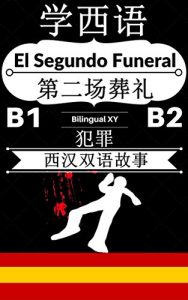
![Baixar [Learn German-Bilingual Crime Story] Die Zweite Beerdigung — The Second Funeral: German-English Parallel Text (German B1, German B2) (German-English Bilingual Stories) (English Edition) pdf, epub, eBook](https://br.99ebooks.net/wp-content/uploads/2017/05/51BO6zUMsFL-188x300.jpg)
![Baixar [Learn German-Bilingual Love Story] Mit Wem Du Deine Wohnung Teilst — The New Roommate: German-English Parallel Text (German B1, German B2) (German-English Bilingual Stories) (English Edition) pdf, epub, eBook](https://br.99ebooks.net/wp-content/uploads/2017/05/51y7OqaWSYL-188x300.jpg)
![Baixar [Learn Spanish-Bilingual Crime Story] El Segundo Funeral — The Second Funeral: Spanish-English Parallel Text (Spanish B1, Spanish B2) (Spanish-English Bilingual Stories) (English Edition) pdf, epub, eBook](https://br.99ebooks.net/wp-content/uploads/2017/05/51VKqMbnWCL-188x300.jpg)