Here’s my story,
Circulatory,
It's what they call my system,
I got veins and arteries,
For blood,
And you can’t miss ‘em…
Surely, I am circulatory,
Blood's pumped,
Round and round...
Use my heart,
And blood vessels,
Surely will astound…
Veins bring blood,
To my heart,
To lungs,
Is where it's pumped...
Oxygen comes from lungs,
My heart goes thump-thump-thump...
Blood from lungs,
Returns to heart,
And then to artery,
Which carries blood,
To every organ,
In every part-a-me…
Surely, I am circulatory,
I pump blood round and round,
Use my heart,
And blood vessels,
I surely I will astound!
From Mr. R.'s Human Body Poems
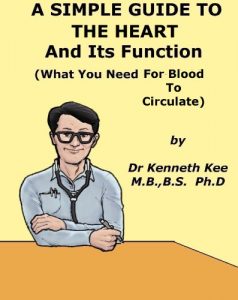
This was going to be a book on the anatomy and physiology of the Heart.
It still is a book on the Heart and why a human needs a Heart to Keep the Blood Circulating.
I will try to add some descriptions in simple vernacular words and make it more fun to read.
Interesting facts about the Heart
The adult human heart has a mass of between 250 and 350grams and is about the size of a fist
It weighs approximately 250 to 300 grams (9 to 11 oz) in females and 300 to 350 grams (11 to 12 oz) in males.
The heart is a hollow muscle that pumps blood throughout the blood vessels by repeated, rhythmic contractions.
It is found in all humans with a circulatory system.
The term cardiac means related to the heart.
Cardiac muscle is an involuntary striated muscle tissue found only in this organ and responsible for
the ability of the heart to pump blood.
The heart is made up almost entirely of muscle.
It is strong enough to lift approximately 3,000 pounds the weight of a compact car.
The heartbeat can shoot blood a distance of 30 feet.
On average, a million barrels worth of blood is pumped through the heart in a lifetime.
The average human heart beating at 72 beats per minute will beat approximately 2.5 billion times during an average 66 year lifespan.
Every year the heart beats approximately 35 million times.
That is about 100,000 beats per day and 72 beats per minute.
Over the course of a lifetime that adds up to an average of 2.5 billion heartbeats.
The blood vessels pumped by the heart are more than 60,000 miles long.
They could go around the world two times.
The human heart begins to beat as early as four weeks after conception.
By eight weeks, when the embryo is only an inch long, the heart is fully developed.
The left lung is smaller than the right one to make room in the chest cavity for the heart.
It is located anterior to the vertebral column and posterior to the sternum.
It is enclosed in a double-walled sac called the pericardium
This sac protects the heart, anchors it to the surrounding structures.
The heart is a pump which works continuously to supply blood to the body.
The heart never stops.
It is controlled by the autonomic nervous system.
While the heart never stops, the cardiac cycle consists of a period of relaxation called diastole followed by a period of contraction called systole.
The relaxation period is to allow blood to flow into the heart to be pumped out during systole the period of contraction.
The heart helps the blood to provide oxygen and nutrients to the cells and remove carbon dioxide and waste material from the cells.
There is also the transfer of fluid volume between the plasma and the interstitial tissues.
Heart disease is a major risk.
Morning is peak time for heart attacks.
The majority of heart attacks happen during the hours of 8 and 9 in the morning.
Most heart attacks happen on Mondays.
To avoid heart disease, start walking or jogging.
The risk of heart disease doubles in inactive people versus people who get regular exercise.
Aerobic activity like running, swimming and biking is the best choices for reducing the risk of heart disease.
Taking care of the teeth can have a dramatic impact on heart health.
TABLE OF CONTENT
Introduction
1 The Heart
2 Heart Function
3 The Heart Chambers
4 Protecting the Heart
5 Heart and Diseases
Circulatory,
It's what they call my system,
I got veins and arteries,
For blood,
And you can’t miss ‘em…
Surely, I am circulatory,
Blood's pumped,
Round and round...
Use my heart,
And blood vessels,
Surely will astound…
Veins bring blood,
To my heart,
To lungs,
Is where it's pumped...
Oxygen comes from lungs,
My heart goes thump-thump-thump...
Blood from lungs,
Returns to heart,
And then to artery,
Which carries blood,
To every organ,
In every part-a-me…
Surely, I am circulatory,
I pump blood round and round,
Use my heart,
And blood vessels,
I surely I will astound!
From Mr. R.'s Human Body Poems
This was going to be a book on the anatomy and physiology of the Heart.
It still is a book on the Heart and why a human needs a Heart to Keep the Blood Circulating.
I will try to add some descriptions in simple vernacular words and make it more fun to read.
Interesting facts about the Heart
The adult human heart has a mass of between 250 and 350grams and is about the size of a fist
It weighs approximately 250 to 300 grams (9 to 11 oz) in females and 300 to 350 grams (11 to 12 oz) in males.
The heart is a hollow muscle that pumps blood throughout the blood vessels by repeated, rhythmic contractions.
It is found in all humans with a circulatory system.
The term cardiac means related to the heart.
Cardiac muscle is an involuntary striated muscle tissue found only in this organ and responsible for
the ability of the heart to pump blood.
The heart is made up almost entirely of muscle.
It is strong enough to lift approximately 3,000 pounds the weight of a compact car.
The heartbeat can shoot blood a distance of 30 feet.
On average, a million barrels worth of blood is pumped through the heart in a lifetime.
The average human heart beating at 72 beats per minute will beat approximately 2.5 billion times during an average 66 year lifespan.
Every year the heart beats approximately 35 million times.
That is about 100,000 beats per day and 72 beats per minute.
Over the course of a lifetime that adds up to an average of 2.5 billion heartbeats.
The blood vessels pumped by the heart are more than 60,000 miles long.
They could go around the world two times.
The human heart begins to beat as early as four weeks after conception.
By eight weeks, when the embryo is only an inch long, the heart is fully developed.
The left lung is smaller than the right one to make room in the chest cavity for the heart.
It is located anterior to the vertebral column and posterior to the sternum.
It is enclosed in a double-walled sac called the pericardium
This sac protects the heart, anchors it to the surrounding structures.
The heart is a pump which works continuously to supply blood to the body.
The heart never stops.
It is controlled by the autonomic nervous system.
While the heart never stops, the cardiac cycle consists of a period of relaxation called diastole followed by a period of contraction called systole.
The relaxation period is to allow blood to flow into the heart to be pumped out during systole the period of contraction.
The heart helps the blood to provide oxygen and nutrients to the cells and remove carbon dioxide and waste material from the cells.
There is also the transfer of fluid volume between the plasma and the interstitial tissues.
Heart disease is a major risk.
Morning is peak time for heart attacks.
The majority of heart attacks happen during the hours of 8 and 9 in the morning.
Most heart attacks happen on Mondays.
To avoid heart disease, start walking or jogging.
The risk of heart disease doubles in inactive people versus people who get regular exercise.
Aerobic activity like running, swimming and biking is the best choices for reducing the risk of heart disease.
Taking care of the teeth can have a dramatic impact on heart health.
TABLE OF CONTENT
Introduction
1 The Heart
2 Heart Function
3 The Heart Chambers
4 Protecting the Heart
5 Heart and Diseases