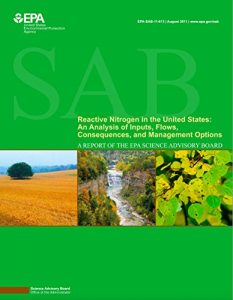
Excess reactive nitrogen compounds in the environment are associated with many large-scale environmental concerns,
including eutrophication of surface waters, toxic algae blooms, hypoxia, acid rain, nitrogen saturation in forests, and
global warming. In addition, reactive nitrogen is associated with harmful human health effects caused by air pollution
and drinking water contamination. Reactive nitrogen (hereafter referred to as Nr) includes all biologically active,
chemically reactive, and radiatively active nitrogen compounds in the atmosphere and biosphere of the earth, in contrast
to non-reactive gaseous N2. EPA and other federal and state agencies have implemented programs to reduce the risks
posed by excessive Nr, but a more comprehensive and integrated approach is needed to manage the use of Nr in a way
to achieve its benefits, such as fertilizer for food production, and mitigate its damages as it is introduced to and cycles
repeatedly through the environment in different forms and media.
The Science Advisory Board (SAB) Integrated Nitrogen Committee has conducted a study to analyze sources and
fate of Nr in the United States and provide advice to EP A on integrated nitrogen research and control strategies. We are
pleased to submit the SAB report, Reactive Nitrogen in the United States: An Analysis of Inputs, Flows, Consequences,
and Management Options. Our objectives for this study were to:
• Identify and analyze from a scientific perspective the problems Nr presents in the environment and the links among
them;
• Evaluate the contribution an integrated nitrogen management strategy could make to environmental protection;
• Identify additional risk management options for EPA’s consideration; and
• Make recommendations to EP A concerning improvements in nitrogen research to support risk reduction.
The SAB report provides findings and recommendations addressing these study objectives. Assessment of the challenges
and costs to the Agency of implementing the recommendations is beyond the scope of the report.
In general, the SAB finds that:
• In the United States, human activities across multiple sources currently introduce more than five times the Nr into
the environment than natural processes. The largest U.S. sources of new Nr entering the U.S. environment include:
the creation and use of synthetic fertilizers, Nr created by legumes, and the combustion of fossil fuels.
• Much of the Nr used to ensure a plentiful supply of food, fiber and biofuel is released to the environment, as is the
Nr formed during fossil fuel combustion.
• The introduction of human created Nr into the environment degrades air and water quality, which can cause harmful
algae blooms, hypoxia, fish kills, loss of drinking water potability, loss of biodiversity, forest declines, and human
health problems resulting in losses of billions of dollars per year.
• Multiple strategies and actions exist to more effectively minimize the inputs of Nr to the environment and maximize
nitrogen use efficiency.
including eutrophication of surface waters, toxic algae blooms, hypoxia, acid rain, nitrogen saturation in forests, and
global warming. In addition, reactive nitrogen is associated with harmful human health effects caused by air pollution
and drinking water contamination. Reactive nitrogen (hereafter referred to as Nr) includes all biologically active,
chemically reactive, and radiatively active nitrogen compounds in the atmosphere and biosphere of the earth, in contrast
to non-reactive gaseous N2. EPA and other federal and state agencies have implemented programs to reduce the risks
posed by excessive Nr, but a more comprehensive and integrated approach is needed to manage the use of Nr in a way
to achieve its benefits, such as fertilizer for food production, and mitigate its damages as it is introduced to and cycles
repeatedly through the environment in different forms and media.
The Science Advisory Board (SAB) Integrated Nitrogen Committee has conducted a study to analyze sources and
fate of Nr in the United States and provide advice to EP A on integrated nitrogen research and control strategies. We are
pleased to submit the SAB report, Reactive Nitrogen in the United States: An Analysis of Inputs, Flows, Consequences,
and Management Options. Our objectives for this study were to:
• Identify and analyze from a scientific perspective the problems Nr presents in the environment and the links among
them;
• Evaluate the contribution an integrated nitrogen management strategy could make to environmental protection;
• Identify additional risk management options for EPA’s consideration; and
• Make recommendations to EP A concerning improvements in nitrogen research to support risk reduction.
The SAB report provides findings and recommendations addressing these study objectives. Assessment of the challenges
and costs to the Agency of implementing the recommendations is beyond the scope of the report.
In general, the SAB finds that:
• In the United States, human activities across multiple sources currently introduce more than five times the Nr into
the environment than natural processes. The largest U.S. sources of new Nr entering the U.S. environment include:
the creation and use of synthetic fertilizers, Nr created by legumes, and the combustion of fossil fuels.
• Much of the Nr used to ensure a plentiful supply of food, fiber and biofuel is released to the environment, as is the
Nr formed during fossil fuel combustion.
• The introduction of human created Nr into the environment degrades air and water quality, which can cause harmful
algae blooms, hypoxia, fish kills, loss of drinking water potability, loss of biodiversity, forest declines, and human
health problems resulting in losses of billions of dollars per year.
• Multiple strategies and actions exist to more effectively minimize the inputs of Nr to the environment and maximize
nitrogen use efficiency.