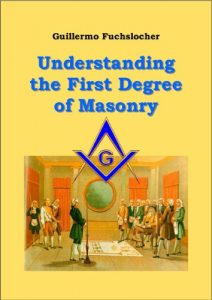
There are millions of masons throughout the world and all of them possess the first
degree of masonry, the apprentice degree, which they never abandon, because
the additional degrees they might achieve are complementary to the first one, for
it established the common base of masonic teachings. Yet, how do masons think?
What is the objective of the first degree and of all masons who possess it? These
are usually tough questions to answer, because you will hear that Masonry has no
official doctrine, or that its doctrine lies in its symbols, or that it concerns the “masonic secret”. But it is exactly these questions that this publication seeks to answer, doing it from the perspective from an experienced mason, whose purpose is to “instruct” those who have recently initiated in any of the principle kinds of masonry, which are known as “Rites” (Ancient and Accepted Scottish, York, French or Modern, Primitive).
Here you will find the general objectives of Masonry and the reason of its division in degrees, how its symbols are to be interpeted, what do its rituals say, its topics of philosophical reflexion, its studies, its ethics, and what it is expected from the behaviour of its members.
degree of masonry, the apprentice degree, which they never abandon, because
the additional degrees they might achieve are complementary to the first one, for
it established the common base of masonic teachings. Yet, how do masons think?
What is the objective of the first degree and of all masons who possess it? These
are usually tough questions to answer, because you will hear that Masonry has no
official doctrine, or that its doctrine lies in its symbols, or that it concerns the “masonic secret”. But it is exactly these questions that this publication seeks to answer, doing it from the perspective from an experienced mason, whose purpose is to “instruct” those who have recently initiated in any of the principle kinds of masonry, which are known as “Rites” (Ancient and Accepted Scottish, York, French or Modern, Primitive).
Here you will find the general objectives of Masonry and the reason of its division in degrees, how its symbols are to be interpeted, what do its rituals say, its topics of philosophical reflexion, its studies, its ethics, and what it is expected from the behaviour of its members.