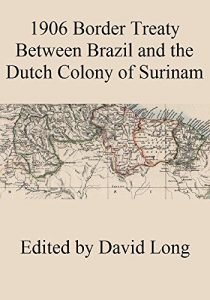
Brazil shares a border with the South American country of Surinam (or Suriname). Before 1975, Surinam was a Dutch colony, sometimes referred to as Dutch Guiana.. It was considered to be one of the “3 Guianas”- the other 2 “Guianas” were its neighbours, British Guiana (modern-day Guyana) to the west and French Guiana (or Guyane) to the east.
In colonial times, Brazil was settled by Portugal and almost all of the rest of South America was claimed by Spain. But the Guianas were left to the northwestern European powers of France, England, and the Netherlands. These 3 powers fought one another for control of these territories. At one time, the English controlled what is now Surinam, while the Dutch ruled what is now Guyana. But the Dutch eventually captured control of Surinam. Meanwhile, the British took over the Dutch colonies of Essequibo, Demerara, and Berbice in what is now Guyana during the French Revolutionary and Napoleonic wars in the late 18th and early 19th century.
The British, Dutch, and French settlements and sugar plantations in the Guianas were concentrated along the upper reaches of rivers and along the coasts. The interior of these countries was densely forested, and sparsely populated. The border between the forested interior of Dutch-ruled Surinam and Brazil was not clearly marked. This treaty, made in 1906 between the Dutch and Brazilian governments, delineated that border.
In colonial times, Brazil was settled by Portugal and almost all of the rest of South America was claimed by Spain. But the Guianas were left to the northwestern European powers of France, England, and the Netherlands. These 3 powers fought one another for control of these territories. At one time, the English controlled what is now Surinam, while the Dutch ruled what is now Guyana. But the Dutch eventually captured control of Surinam. Meanwhile, the British took over the Dutch colonies of Essequibo, Demerara, and Berbice in what is now Guyana during the French Revolutionary and Napoleonic wars in the late 18th and early 19th century.
The British, Dutch, and French settlements and sugar plantations in the Guianas were concentrated along the upper reaches of rivers and along the coasts. The interior of these countries was densely forested, and sparsely populated. The border between the forested interior of Dutch-ruled Surinam and Brazil was not clearly marked. This treaty, made in 1906 between the Dutch and Brazilian governments, delineated that border.