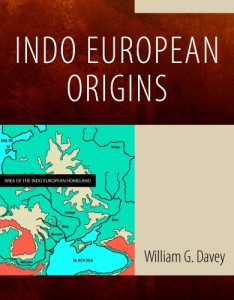
The Indo-Europeans peoples are identified as having a common ancestry because they speak related languages that extend, as the name implies, from India to Ireland. The languages include the many Hindu and other Indian languages, that of the Persians, the Kurds, Armenians, the extinct Hittites, and all of the languages of Europe excluding Basque, Hungarian, and Finnish. Among these peoples extensive mythologies have survived in Indian, Persian, Greek, Norse or Germanic, Irish, and Welsh;
Here we present a summary guide to our six essentially “Stand-alone” Kindle presentations of Indian, Irish, Arthurian Welsh, Norse and Germanic, Greek, and Persian mythology. These show that all of these mythologies are derived from the histories of seven members of six generations of one family that we may truly call the “Family of the Gods”.
The key to our successful analysis of these mythologies is our discovery that all the major figures are known by many, many names. These are found linked together in Indian but only some are preserved in the other five mythologies.
Their names, family relationships, and exploits are all to be found scattered through the mythologies of the Indo-Europeans but they are most completely preserved in Indian mythology and religion and in Indian terms they extend from Brahma to Krishna. However all of the gods were known by many names and in all cases the individual mythology has been placed in the land of the teller. Thus different names often survive in different lands but sometimes the connections are clear. An important illustration of such a connection the fact that the “King of the Gods” has the same name in the Indian, Norse, and Welsh accounts, namely Gadhin, Gwoden, and Gwydion.
In each of our separate studies we summarize the movements of these people from the Indo-European homeland into their lands, the documentary sources of their myths, and the major links between the separate mythologies. Each study includes the history of the people, of the documentary sources, of the content of these sources and their reliability, of summaries of the themes and lives of the principals. Throughout we are concerned with the genealogies since they are deeply revealing of often-unrecognized family relationships and the many names of individuals.
While we applaud the scholarship and dedication of the many existing learned and painstaking accounts of these mythologies we must say that the conventional stories are at best incomplete. More honestly, because they cannot include our unique discoveries, they are all severely limited and often simply wrong.
Here we present a summary guide to our six essentially “Stand-alone” Kindle presentations of Indian, Irish, Arthurian Welsh, Norse and Germanic, Greek, and Persian mythology. These show that all of these mythologies are derived from the histories of seven members of six generations of one family that we may truly call the “Family of the Gods”.
The key to our successful analysis of these mythologies is our discovery that all the major figures are known by many, many names. These are found linked together in Indian but only some are preserved in the other five mythologies.
Their names, family relationships, and exploits are all to be found scattered through the mythologies of the Indo-Europeans but they are most completely preserved in Indian mythology and religion and in Indian terms they extend from Brahma to Krishna. However all of the gods were known by many names and in all cases the individual mythology has been placed in the land of the teller. Thus different names often survive in different lands but sometimes the connections are clear. An important illustration of such a connection the fact that the “King of the Gods” has the same name in the Indian, Norse, and Welsh accounts, namely Gadhin, Gwoden, and Gwydion.
In each of our separate studies we summarize the movements of these people from the Indo-European homeland into their lands, the documentary sources of their myths, and the major links between the separate mythologies. Each study includes the history of the people, of the documentary sources, of the content of these sources and their reliability, of summaries of the themes and lives of the principals. Throughout we are concerned with the genealogies since they are deeply revealing of often-unrecognized family relationships and the many names of individuals.
While we applaud the scholarship and dedication of the many existing learned and painstaking accounts of these mythologies we must say that the conventional stories are at best incomplete. More honestly, because they cannot include our unique discoveries, they are all severely limited and often simply wrong.