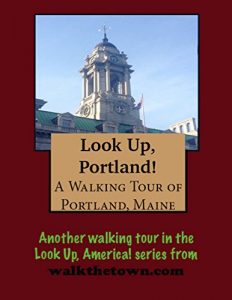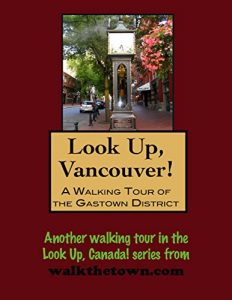
There is no better way to see Canada than on foot. And there is no better way to appreciate what you are looking at than with a walking tour.
Each walking tour describes historical and architectural landmarks and provides pictures to help out when those pesky street addresses are missing. Every tour also includes a quick primer on identifying architectural styles seen on Canadian streets.
Although José María Narváez was only 23 years old when he became the first European to sail into what would become Vancouver Harbour in 1791 he was already a veteran of several Spanish expeditions in the Pacific Northwest. The following year Captain George Vancouver charted North America’s northwestern Pacific Coast and although he would die in obscurity at the age of 40 just six years later he made sure his name and those of many of his friends would live on for centuries. Among the landmarks George Vancouver named were the famous American mountains - Mount Rainier, Mount Hood, Mount Baker and Mount St. Helens and the main harbour of the future Vancouver, Burrard Inlet, remembering his friend Sir Henry Burrard.
The first industry that developed along Burrard Inlet was logging; American lumberman Sewell Moody built the first sawmill in 1863 and his Moodyville camp was the first settlement on the inlet. About that time Canada was forming into an independent country back east and in 1871 British Columbia agreed to join the Confederation on the condition that it would be linked to the transcontinental railroad. It took the Canadian Pacific Railway (CPR) 15 years to make good on the bargain. In the interim it was assumed the western terminus of the railroad would be Moodyville on the eastern end of Burrard Inlet. But in 1884 general manager William Van Horne visited the area and dismissed the existing settlement as too shallow for ocean-going ships to meet the railroad.
He looked around and recommended a site on English Bay occupied by a collection of ramshackle wooden structures called Granville, which happened to have the advantage of plenty of land that could be granted to the CPR to develop a major coastal townsite. So it came to be that the Canadian Pacific Railway terminated on piles on the shore along Water Street in 1886. In keeping with his grand vision for British Columbia’s new mainland port Van Horne jettisoned the “Granville” name and replaced it with “Vancouver.” The town was incorporated on April 6, 1886.
Regardless of what officials were doing with the name, the 400 or so residents were used to calling their home “Gastown,” as it had developed around the saloon of Yorkshire seaman “Gassy” Jack Deighton, a world-class talker. Vancouver was not even nine weeks old when sparks from a brush-clearing fire blew into town and burned every building save two to the ground in a firestorm on June 13, 1886. Undaunted the optimistic townsfolk started rebuilding before the smoke blew out of town and the first brick buildings were being occupied when the first Canadian Pacific Railway train, #374, steamed into the station on July 4, 1886.
The population burst to more than 13,000 by 1890 and after a financial panic in the early 1890s the Klondike Gold Rush insured Vancouver’s status as a major Pacific Coast port city. The original townsite at Gastown, however, did not fare as well during the 20th century as Canada’s third-largest city spread out in every direction. The neighbourhood was rescued by the preservation movement of the latter half of the century, however, and has been re-born as a mix of tourist-oriented businesses, re-purposed housing and cultural destinations. Our walking tour of the transformation of Gastown will begin where the city started - on the site of Gassy Jack Deighton’s whiskey bar...
Each walking tour describes historical and architectural landmarks and provides pictures to help out when those pesky street addresses are missing. Every tour also includes a quick primer on identifying architectural styles seen on Canadian streets.
Although José María Narváez was only 23 years old when he became the first European to sail into what would become Vancouver Harbour in 1791 he was already a veteran of several Spanish expeditions in the Pacific Northwest. The following year Captain George Vancouver charted North America’s northwestern Pacific Coast and although he would die in obscurity at the age of 40 just six years later he made sure his name and those of many of his friends would live on for centuries. Among the landmarks George Vancouver named were the famous American mountains - Mount Rainier, Mount Hood, Mount Baker and Mount St. Helens and the main harbour of the future Vancouver, Burrard Inlet, remembering his friend Sir Henry Burrard.
The first industry that developed along Burrard Inlet was logging; American lumberman Sewell Moody built the first sawmill in 1863 and his Moodyville camp was the first settlement on the inlet. About that time Canada was forming into an independent country back east and in 1871 British Columbia agreed to join the Confederation on the condition that it would be linked to the transcontinental railroad. It took the Canadian Pacific Railway (CPR) 15 years to make good on the bargain. In the interim it was assumed the western terminus of the railroad would be Moodyville on the eastern end of Burrard Inlet. But in 1884 general manager William Van Horne visited the area and dismissed the existing settlement as too shallow for ocean-going ships to meet the railroad.
He looked around and recommended a site on English Bay occupied by a collection of ramshackle wooden structures called Granville, which happened to have the advantage of plenty of land that could be granted to the CPR to develop a major coastal townsite. So it came to be that the Canadian Pacific Railway terminated on piles on the shore along Water Street in 1886. In keeping with his grand vision for British Columbia’s new mainland port Van Horne jettisoned the “Granville” name and replaced it with “Vancouver.” The town was incorporated on April 6, 1886.
Regardless of what officials were doing with the name, the 400 or so residents were used to calling their home “Gastown,” as it had developed around the saloon of Yorkshire seaman “Gassy” Jack Deighton, a world-class talker. Vancouver was not even nine weeks old when sparks from a brush-clearing fire blew into town and burned every building save two to the ground in a firestorm on June 13, 1886. Undaunted the optimistic townsfolk started rebuilding before the smoke blew out of town and the first brick buildings were being occupied when the first Canadian Pacific Railway train, #374, steamed into the station on July 4, 1886.
The population burst to more than 13,000 by 1890 and after a financial panic in the early 1890s the Klondike Gold Rush insured Vancouver’s status as a major Pacific Coast port city. The original townsite at Gastown, however, did not fare as well during the 20th century as Canada’s third-largest city spread out in every direction. The neighbourhood was rescued by the preservation movement of the latter half of the century, however, and has been re-born as a mix of tourist-oriented businesses, re-purposed housing and cultural destinations. Our walking tour of the transformation of Gastown will begin where the city started - on the site of Gassy Jack Deighton’s whiskey bar...