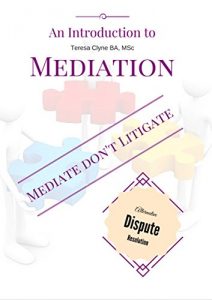
This introductory Mediation book provides a foundation for anyone seeking to understand the mediation process.
Alternative Dispute Resolution - this book deals with:
All fields of mediation, including civil and commercial, workplace and employment, family and community
Mediation concepts — including interests, framing, and dialogue-building—and use them not just at the mediation table but also in your marketing.
The Concept of Mediation
•understand the psychology and behaviours
which produce Constructive or destructive
outcomes resulting from situations of Conflict
•recognise the differences between mediation
and other forms of conflict/dispute resolution
•demonstrate an in-depth understanding of
the values and ethics underpinning mediation
such as empowerment, mutual respect and
the equity of exchange
•demonstrate ability to apply theory to the
development of effective mediation practice
•differentiate between party autonomy,
mediator authority and power, and the
protection of a fair process
•understand the relationship between
mediation and the law in different contexts
and within different jurisdictions.
•critically analyse the various stages of the
mediation process
•evaluate the benefits of mediation for each of
the stakeholders engaged with the process.
The various stages of the mediation process
•Convening process and preliminary
arguments.
•Mediation introduction and laying down the
ground rules for mediation.
•Statements by party spokesperson, followed
by a repeat of the unsolved issue by the
mediator.
•Setting the agenda for mediation.
•Facilitating the mediation.
•Reaching a negotiated settlement.
The Psychology and Philosophy of Mediation
It's not the money, it’s the principle
Different Types of Conflict
Task-Oriented Conflict
Personal Conflict
Mediate or Not..! ?
The Advantages and Disadvantages of Mediation
Constructive behaviour
Win-win solutions.
Non-judgmental actions.
Active resolution of conflict
Thoughtful, not impulsive, responses.
Destructive behaviour.
Feelings of anger and frustration.
Judgmental actions.
The differences between negotiation, mediation, and arbitration.
Independent
Confidentiality
Equality and empowerment
The relationship between mediation and the law
Mediation Laws in Ireland
High Court Proceedings
Provisions of the Directive
Enforcement of Court Orders Act, 2009
Circuit Court Rules (Case Progression General), 2009
Multi-Units Development Act, 2011
Commercial Court Rules
Civil Liability and Courts Act, 2004
Analyse the various stages of the mediation process
Facilitating the Mediation.
Mediation Agreement
Models of Mediation
Do’s and Don’ts of Mediation:
Family Mediation
Plan the Separation Agreement
Wills & inheritance
Organisational and Workplace Mediation
Management/staff difficulties
Staff/patient conflicts
Community Mediation
Homeless young people and their families
Elderly people and their carers
Families and local education authorities
Peer Mediation
Restorative Justice
Post-sentencing
Victim-offender mediation
Reparative mediation
Models of Mediation
Co-Mediation
Shuttle Mediation
Facilitative Mediation
Mediation Practice
Matching
Pacing
Leading
Non-verbal communication
Non-verbal Vocal
Space
Objects
Colour
Facial Expressions
Movement
Time
Touch
Impartiality and Mediation
Prejudices and philosophy in Mediation
Co-mediation.
Supervision.
Emotional Reactions in Conflicts
Alternative Dispute Resolution - this book deals with:
All fields of mediation, including civil and commercial, workplace and employment, family and community
Mediation concepts — including interests, framing, and dialogue-building—and use them not just at the mediation table but also in your marketing.
The Concept of Mediation
•understand the psychology and behaviours
which produce Constructive or destructive
outcomes resulting from situations of Conflict
•recognise the differences between mediation
and other forms of conflict/dispute resolution
•demonstrate an in-depth understanding of
the values and ethics underpinning mediation
such as empowerment, mutual respect and
the equity of exchange
•demonstrate ability to apply theory to the
development of effective mediation practice
•differentiate between party autonomy,
mediator authority and power, and the
protection of a fair process
•understand the relationship between
mediation and the law in different contexts
and within different jurisdictions.
•critically analyse the various stages of the
mediation process
•evaluate the benefits of mediation for each of
the stakeholders engaged with the process.
The various stages of the mediation process
•Convening process and preliminary
arguments.
•Mediation introduction and laying down the
ground rules for mediation.
•Statements by party spokesperson, followed
by a repeat of the unsolved issue by the
mediator.
•Setting the agenda for mediation.
•Facilitating the mediation.
•Reaching a negotiated settlement.
The Psychology and Philosophy of Mediation
It's not the money, it’s the principle
Different Types of Conflict
Task-Oriented Conflict
Personal Conflict
Mediate or Not..! ?
The Advantages and Disadvantages of Mediation
Constructive behaviour
Win-win solutions.
Non-judgmental actions.
Active resolution of conflict
Thoughtful, not impulsive, responses.
Destructive behaviour.
Feelings of anger and frustration.
Judgmental actions.
The differences between negotiation, mediation, and arbitration.
Independent
Confidentiality
Equality and empowerment
The relationship between mediation and the law
Mediation Laws in Ireland
High Court Proceedings
Provisions of the Directive
Enforcement of Court Orders Act, 2009
Circuit Court Rules (Case Progression General), 2009
Multi-Units Development Act, 2011
Commercial Court Rules
Civil Liability and Courts Act, 2004
Analyse the various stages of the mediation process
Facilitating the Mediation.
Mediation Agreement
Models of Mediation
Do’s and Don’ts of Mediation:
Family Mediation
Plan the Separation Agreement
Wills & inheritance
Organisational and Workplace Mediation
Management/staff difficulties
Staff/patient conflicts
Community Mediation
Homeless young people and their families
Elderly people and their carers
Families and local education authorities
Peer Mediation
Restorative Justice
Post-sentencing
Victim-offender mediation
Reparative mediation
Models of Mediation
Co-Mediation
Shuttle Mediation
Facilitative Mediation
Mediation Practice
Matching
Pacing
Leading
Non-verbal communication
Non-verbal Vocal
Space
Objects
Colour
Facial Expressions
Movement
Time
Touch
Impartiality and Mediation
Prejudices and philosophy in Mediation
Co-mediation.
Supervision.
Emotional Reactions in Conflicts