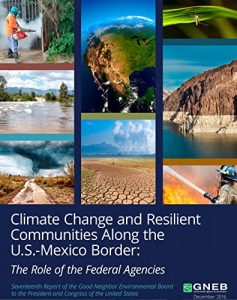
On behalf of your Good Neighbor Environmental Board, I am submitting to you our 17th
Report, Climate Change and Resilient Communities Along the U.S.-Mexico Border: The Role of
the Federal Agencies. In our report, the Board summarizes the effects that climate change is
having in the U.S.-Mexico border region, identifies possible future impacts based on current
trends, and makes a series of recommendations that the federal government can take in
concert with state, local and tribal governments and partners in the private sector to mitigate
and adapt to climate change along our southern border.
Our report deals with a number of the issues in the border region that we have examined
in the past—including air quality, water quality and availability, human health, energy, and
vulnerable populations—but in this case focuses on the cumulative impacts climate change
will bring in all of these areas. Our recommendations emphasize the essential role that the
federal government plays in addressing the effects of a changing climate along our shared
border with Mexico. The many national, subnational and international programs to deal
with the effects of climate change along the border will not succeed without strong and
unwavering support from the federal departments and agencies whose expertise and resources
are crucial.
One area we have particularly tried to highlight is the disproportionate effects of climate
change that will be borne by the poor, the disadvantaged and tribal nations in the border
region that already are underserved and challenged economically. Many of these communities
will be increasingly challenged to cope with rising temperatures, decreased supplies of potable
water, an increased prevalence of infectious diseases, and extreme weather events. In many
cases, these communities and the people in them lack the financial means to partially shield
themselves from these impacts of climate change and will suffer the consequences in ways the
more affluent will not.
Our past reports have noted the unique characteristics of the U.S.-Mexico border region.
As a whole, it is one of the hottest, driest and poorest areas of the country, yet it is growing
rapidly and is vital to the U.S. economy. Mexico is the United States’ third largest trading
partner, and the stream of commerce crossing our shared border is essential to the economic
prosperity of both countries. The Board’s hope is that its report and recommendations have
identified actions that the U.S. federal government can take to help protect and preserve the
communities, environment and economy of the border region.
Report, Climate Change and Resilient Communities Along the U.S.-Mexico Border: The Role of
the Federal Agencies. In our report, the Board summarizes the effects that climate change is
having in the U.S.-Mexico border region, identifies possible future impacts based on current
trends, and makes a series of recommendations that the federal government can take in
concert with state, local and tribal governments and partners in the private sector to mitigate
and adapt to climate change along our southern border.
Our report deals with a number of the issues in the border region that we have examined
in the past—including air quality, water quality and availability, human health, energy, and
vulnerable populations—but in this case focuses on the cumulative impacts climate change
will bring in all of these areas. Our recommendations emphasize the essential role that the
federal government plays in addressing the effects of a changing climate along our shared
border with Mexico. The many national, subnational and international programs to deal
with the effects of climate change along the border will not succeed without strong and
unwavering support from the federal departments and agencies whose expertise and resources
are crucial.
One area we have particularly tried to highlight is the disproportionate effects of climate
change that will be borne by the poor, the disadvantaged and tribal nations in the border
region that already are underserved and challenged economically. Many of these communities
will be increasingly challenged to cope with rising temperatures, decreased supplies of potable
water, an increased prevalence of infectious diseases, and extreme weather events. In many
cases, these communities and the people in them lack the financial means to partially shield
themselves from these impacts of climate change and will suffer the consequences in ways the
more affluent will not.
Our past reports have noted the unique characteristics of the U.S.-Mexico border region.
As a whole, it is one of the hottest, driest and poorest areas of the country, yet it is growing
rapidly and is vital to the U.S. economy. Mexico is the United States’ third largest trading
partner, and the stream of commerce crossing our shared border is essential to the economic
prosperity of both countries. The Board’s hope is that its report and recommendations have
identified actions that the U.S. federal government can take to help protect and preserve the
communities, environment and economy of the border region.