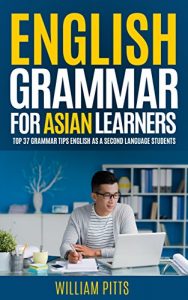
THIS BOOK IS FOR ASIAN "ENGLISH AS A SECOND LANGUAGE" LEARNERS WHO WANT USE ENGLISH MORE EFFECTIVELY
Do you want to make your English more fluent?
Do you want to speak English like a native?
Do you want to understand the most important grammar and usage rules?
Do you want to learn correct English for the IELTS, TOEFL, SAT, GMAT or GRE exams?
English as a Second Language learners make common mistakes in English grammar and usage. Native speakers of Chinese, Korean, Japanese and other Asian languages all make the same errors.
This book gives easy to understand examples of the correct grammar and usage so your English sounds fluent and professional.
Mastering these rules will make your English sound smooth and confident.
Correct grammar will make communication for school, business or travel easier for you.
These are the most common errors I have noticed over 30 years of teaching English as a Second language.
The book has 37 top tips for remembering the most common grammar rules and correct usage so your English is both fluent and correct.
Please Scroll to the top and click the “Buy Now” button and you will improve your English!
Each grammar and usage rule has an example of the correct way to use the rule so you will remember it.
Here are some of the topics covered in the book:
"less" versus "fewer"
"it’s" versus "its"
"too" versus "two" versus "to"
"well" versus "good"
the important difference between “he” and “she” and “him” and “her”
"me" versus "myself" versus "I"
common mispronunciations
proper and fun English language slang (and what not to say)
euphemisms for talking everyday things in a funny and more polite way such as death, sex, love, illness and baldness
American versus British spellings for common words
County names versus language names: “Jean is from France and he speaks French, while Robert is from American and speaks English”
Where do English language nicknames come from, or can William also be called Will or Willie or Bill or Billy (yes, he can)