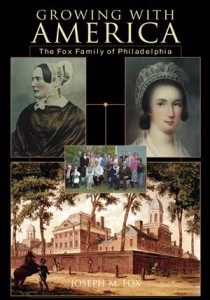
This book tells of a voyage of discovery by the author, a retired Bechtel chief process engineer and chemical engineering society director, whose previous writings concerned Methane Valorization and Fischer-Tropsch Reactor Design. Trying to explain why a thirteen year old boy would join a Quaker expedition to Philadelphia in 1686 he devises a fictionalized account that is eventually supported by genetic testing. Along the way he discovers, among his ancestors, a master carpenter turned politician, America?s first golf club owner and a doctor of whom it was written, ?There was a popular notion that he cured his patients.? He finds a ?Young Squire? who taunts the British with school pamphlets during the Revolutionary War and several Quakers who were sent off to Virginia during that war - much as we locked up the Japanese during World War II. While written as a family history, the reader will find tie-ins to Benjamin Franklin?s papers, to Shakespeare?s The Tempest, to a British diarist who wrote about William Wordsworth and to an anti-slavery tract by Fanny Kemble. The book sheds light on family?s papers kept under wraps at historical libraries but leaves the final answers up to future generations. In the author´s own words, "I became interested in Fox family genealogy as a result of a business trip to Bechtel?s London Office in 1974. While there as the process design manager for an Algerian Liquified Natural Gas project, I took the opportunity to visit the Friends? Library on Euston Road. There I found a family tree called Descendants of Francis Fox of St. German?s, by Joseph Foster and also Anne Cresson?s biography of my own ancestor, Joseph Fox, who had been Speaker of the Pennsylvania Assembly during the Stamp Act uproar. I also located several books that seemed of immediate interest: The Journals of Caroline Fox 1835-1871, edited by Wendy Monk, and a biography, Caroline Fox, by Wilson Harris. These gave the approximate locations of several family estates out in Cornwall near Falmouth. There had been many famous visitors to these estates; men such as Wordsworth, Tennyson, Mill and Carlyle, and Caroline Fox had described their conversations in her Journals. "I then convinced a fellow process design engineer, Bob Chu, to drive with me out to Falmouth over a weekend. There we found the closed offices of G. C. Fox & Company, shipbrokers, and the Fox Rosehill Gardens but no other sign of Fox activity. I was a little discouraged. Bob was intrigued, however, and insisted we investigate further. So on Sunday morning we drove further west and found the Glendurgan estate, with foxes on the gateposts and Mrs. Philip Hamilton (Rona) Fox about to start up a lawnmower in the garage. She immediately dropped what she was doing and led us into her house where notes were compared on family connections. One of Francis Fox?s sons had sailed to Philadelphia in 1686 on the same ship as Justinian Fox, my own ancestor. "Bob and I then had a chance to tour the fabulous Glendurgan Gardens, just recently added to the National Trust. We also stopped off at Catchfrench, an estate in St. German?s, near Plymouth, where I sat in the ruins of the house where Francis Fox had lived in the mid-1600s. This was enough to send a chill up my spine and got me to thinking about recording all of this history. Back in London, Rona?s second son, Charles Lloyd Fox, introduced me to more relatives. As is described in this book, our families have maintained this relationship ever since then. "Work on this book actually started in 1992 after I retired from Bechtel and my wife, Betty, died of Lupus, both in rapid succession. I joined a Creative Writing Extension Class run by U. C. Berkeley and, for my project, started the fictionalized account recorded in the first two chapters of this book. I had learned that Justinian had only been 13 years old when he joined the Plymouth Friends and immigrated to America. This seemed to me to have the makings of a good story and I was encouraged by the teacher to write a follow-up. The follow-up eventually turned into this book. "I was blest with more than the usual amount of written material on my family but a lot of it was hidden away in family archives at the American Philosophical Society and the Historical Society of Pennsylvania. There were hints that Justinian?s son, Joseph Fox, had played a major role behind the scenes in events leading up to the Revolutionary War. As a founder and president of the Carpenters? Company when Carpenters? Hall was built and, with an office in the building, it was apparent that he must have had a hand in all those revolutionary activities that went on in the Hall. But there were no personal papers to go by. It appeared that the British had burned them when they sacked Fox?s house north of town. The transition from guesswork to fact has proven difficult but I believe that the book makes a good case that Joseph Fox was a more important player in the events of that time than has previously been recognized. "Then there were the Benjamin Franklin papers, found in the attic of the Fox Mansion, Champlost, and donated to the American Philosophical Society. The story of the friendship between Joseph Fox?s son, George, and Ben?s grandson, William Temple Franklin, had to be fleshed out. It was all there in Franklin?s papers; George?s visit to Franklin and Adams in Paris and his subsequent visit to Adams in the Netherlands, his business relationship with Temple Franklin after the war and his receipt of the remainder of Ben?s papers after Temple Franklin had finished with them. The fantastic story of how Champlost got its name was found in some early newspapers published at the time the estate was dismantled. "Along with Franklin?s papers, the George Fox family had left papers of their own with the American Philosophical Society and I obtained a number of these to examine. Mostly dealing with land transactions and difficult to read, they nevertheless gave some interesting insights into family relationships with transactions going back into the 1600?s. The Fox family had inherited two estates north of Philadelphia and the history of both of these was there for me to decipher. "Another significant source was the Diary of Elizabeth Drinker, a Quaker lady who kept a daily record of events before and during the revolution. It turned out that she was my great, great, great, great grandmother. "George Fox?s descendants and their relationships with Fanny Kemble were another lead that was too good to be missed. Fanny was the famous British actress and writer who married a Philadelphian named Pierce Butler. The Butler estate was right next to Champlost. Butler also inherited a slave plantation in Georgia and this caused all sorts of problems with Fanny. The Fox family got involved in all of this through the very close friendship that developed between Mary Fox and Fanny Kemble. "Joseph Fox?s youngest son was named Samuel Mickle Fox and he was the one to carry on the family line. My investigations have shown that he, too, was a scholar and a revolutionary. Even though only a teenager he was writing fanciful school papers during the revolutionary war that complained about tyrants oppressing the people. In his short life ? he died at the age of 44 ? he served on city council in Philadelphia, was a founder and first president of the Bank of Pennsylvania, and bought extensively of land in Western Pennsylvania. He also had 13 children, 11 of whom lived long and mostly very productive lives. "That land in Western Pennsylvania, became another story in itself. Samuel?s oldest son, Joseph Mickle Fox, went out west to claim this land, which turned out to be right in the middle of the oil producing country a half century later. This branch of the f
Growing with america
Sobre
Talvez você seja redirecionado para outro site