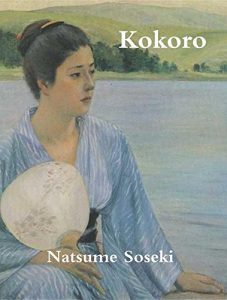
Natsume Sōseki (1867 - 1916) is widely
considered to be the foremost Japanese
novelist of the Meiji period (1868-1912). He
is best known for his novel Kokoro. From
1984 until 2004, his portrait appeared on the
front of the Japanese 1000 yen note.
The title Kokoro literally means "heart",
the word contains shades of meaning,
and can be translated as "the heart of things"
or "feeling". The work deals with the
transition from traditional Japanese society to
the modern era by exploring the friendship
between a young man and an older man he
calls "Sensei" (or teacher).
It continues the theme of isolation developed
in Soseki's earlier works. Other important
themes in the novel include the changing
times, the changing roles and ideals of women,
and intergenerational change in values,
the role of family, the importance of the self
versus the group, the cost of weakness, and
identity.
considered to be the foremost Japanese
novelist of the Meiji period (1868-1912). He
is best known for his novel Kokoro. From
1984 until 2004, his portrait appeared on the
front of the Japanese 1000 yen note.
The title Kokoro literally means "heart",
the word contains shades of meaning,
and can be translated as "the heart of things"
or "feeling". The work deals with the
transition from traditional Japanese society to
the modern era by exploring the friendship
between a young man and an older man he
calls "Sensei" (or teacher).
It continues the theme of isolation developed
in Soseki's earlier works. Other important
themes in the novel include the changing
times, the changing roles and ideals of women,
and intergenerational change in values,
the role of family, the importance of the self
versus the group, the cost of weakness, and
identity.