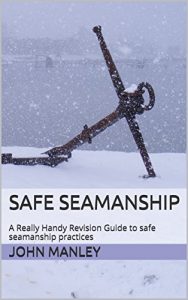
This is a Kindle revision guide for anyone studying for seafarer's professional examinations or certificates of competency.
This guide is based on the 2015 edition of the United Kingdom's 'Code of safe working practices for seafarers'. Although that Code is designed for British flagged vessels, much of its guidance is applicable to vessels sailing under other flags. So if you are studying for other flag state examinations, this guide will still be of use.
Within this guide there are key concepts and facts extracted from the Code, followed by revision questions and answers. Inter-spaced between the questions and answers are some assorted facts and quotations, with the odd sporadic diversion into publications other than COSWP. This guide is a study aid, not a replacement. Neither does this guide attempt to serve the role of a seamanship manual, it focuses on safe working practices, leaving the art of knot tying, splicing and their associated salty skills to other publications.
Use this guide wherever you are, and whenever you have some spare free minutes. Pop in and out of the subject areas as you require, or start at the beginning, and work your way through to the end.
This guide is based on the 2015 edition of the United Kingdom's 'Code of safe working practices for seafarers'. Although that Code is designed for British flagged vessels, much of its guidance is applicable to vessels sailing under other flags. So if you are studying for other flag state examinations, this guide will still be of use.
Within this guide there are key concepts and facts extracted from the Code, followed by revision questions and answers. Inter-spaced between the questions and answers are some assorted facts and quotations, with the odd sporadic diversion into publications other than COSWP. This guide is a study aid, not a replacement. Neither does this guide attempt to serve the role of a seamanship manual, it focuses on safe working practices, leaving the art of knot tying, splicing and their associated salty skills to other publications.
Use this guide wherever you are, and whenever you have some spare free minutes. Pop in and out of the subject areas as you require, or start at the beginning, and work your way through to the end.