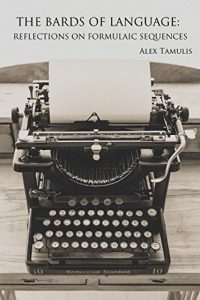
Sixty percent of what we say on a daily basis is formulaic in nature. Spoken language heavily relies on formulaic strings: idioms, fixed expressions, lexical items and pre-fabricated chunks are some of the terms used to describe formulaic language in general. They seem to be processed as wholes and to be semantically dense. However, the fact that spoken language has to be improvised in real-time most of the time adds a potential burden to cognitive processing time. In order to avoid this, the brain retrieves patterns of word strings from memory, like an actor does when speaking his lines in a play, or like a bard used to do in ancient Greece while singing Homeric verses. This book parallels the capacity of such memorization to the role of formulaic sequences, especially in English language teaching.
The Bards of Language: Reflections on Formulaic Sequences (English Edition)
Sobre
Talvez você seja redirecionado para outro site