Abstract
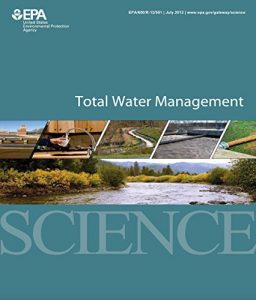
There is a growing need for urban water managers to take a more holistic view of their water resource systems as
population growth, urbanization, and current o perations put different stresses on the environment and urban
infrastructure. Total Water Management (TWM) is an approach that examines urban water systems in a more
interconnected manner, focusing on reducing water demands, increasing water recycling and reuse, creating water
supply assets from stormwater management, matching water quality to end-use needs, and achieving environmental
goals through multi-purpose, multi-benefit infrastructure.
This study documents the benefits of TWM to water management decision-makers and can be used to support the
development of management techniques that could be adopted in order to improve urban systems. This study
includes a comprehensive literature review that summarizes TWM principles and real world applications in the
United States and abroad. The literature review was organized into different regions of the country in order to reflect
geographic water management drivers and challenges.
An evaluation protocol for analyzing TWM is presented, along with a detailed discussion of modeling techniques. A
desk top analysis was conducted to demonstrate how TWM alternatives would perform against traditional approaches
to water management using a systems model. The model simulates supply reliability, total lifecycle costs, water
wastewater capacity, quality of receiving waters, and a number of environmental indicators. The Water Evaluation
and Planning (WEAP) software, developed by the Stockholm Environment Institute, was used as the modeling
platform.
The City of Los Angeles was used as the case study f or desktop analysis, using real data within a real planning
context. The City was divided into four demand areas, each with its own connections to surface water, groundwater,
and imported water supply sources, i.e., water f rom outside City limits, as well as connections to wastewater
treatment plants and receiving waters. TWM strategies that were evaluated included increased water conservation,
expanded water recycling and reuse, graywater, stormwater recharge, and rainwater harvesting. The WEAP model
simulated h ow nitegrated water supply, stormwater and water quality m anagement can provide nicreased
opportunities for achieving urban system goals that would not exist in single-purpose, traditional planning.
There is a growing need for urban water managers to take a more holistic view of their water resource systems as
population growth, urbanization, and current o perations put different stresses on the environment and urban
infrastructure. Total Water Management (TWM) is an approach that examines urban water systems in a more
interconnected manner, focusing on reducing water demands, increasing water recycling and reuse, creating water
supply assets from stormwater management, matching water quality to end-use needs, and achieving environmental
goals through multi-purpose, multi-benefit infrastructure.
This study documents the benefits of TWM to water management decision-makers and can be used to support the
development of management techniques that could be adopted in order to improve urban systems. This study
includes a comprehensive literature review that summarizes TWM principles and real world applications in the
United States and abroad. The literature review was organized into different regions of the country in order to reflect
geographic water management drivers and challenges.
An evaluation protocol for analyzing TWM is presented, along with a detailed discussion of modeling techniques. A
desk top analysis was conducted to demonstrate how TWM alternatives would perform against traditional approaches
to water management using a systems model. The model simulates supply reliability, total lifecycle costs, water
wastewater capacity, quality of receiving waters, and a number of environmental indicators. The Water Evaluation
and Planning (WEAP) software, developed by the Stockholm Environment Institute, was used as the modeling
platform.
The City of Los Angeles was used as the case study f or desktop analysis, using real data within a real planning
context. The City was divided into four demand areas, each with its own connections to surface water, groundwater,
and imported water supply sources, i.e., water f rom outside City limits, as well as connections to wastewater
treatment plants and receiving waters. TWM strategies that were evaluated included increased water conservation,
expanded water recycling and reuse, graywater, stormwater recharge, and rainwater harvesting. The WEAP model
simulated h ow nitegrated water supply, stormwater and water quality m anagement can provide nicreased
opportunities for achieving urban system goals that would not exist in single-purpose, traditional planning.